
Why homeowners feel like they're guessing

A car comes with research, reviews, and a test drive — and once you sign, the transaction is done. A major home project comes with none of that, and the contractor stays in your life for months. Why the homeowner buying experience needs to do more.
Most people would never buy a car without doing the research first.
They compare models, watch reviews, ask friends, read specs, and build the exact car they want online before walking into a dealership. And after all of that, they still get to take a test drive — sit in it, drive it, see how it fits their life.
Then they sign the papers, drive off the lot, and the transaction is done.
Now picture planning a major home project — a remodel, an addition, an ADU, an outdoor space, a custom build. The decision is bigger. The process is less familiar. There is no test drive. And the transaction does not end at the signature. The contractor and their crews will be in the house for weeks or months. Walking through bedrooms. Cutting holes in walls. Coming back the next morning. It is not a purchase, it is a relationship — and the homeowner has to decide whether they want these people, and everyone who works for them, in their lives for that long.
We went through this ourselves when we built our own ADU. We wanted it to do several jobs — a home office, a space for backyard entertaining, and eventually somewhere a parent could stay if they needed to be close. Even with a clear sense of why, the how was full of unknowns.
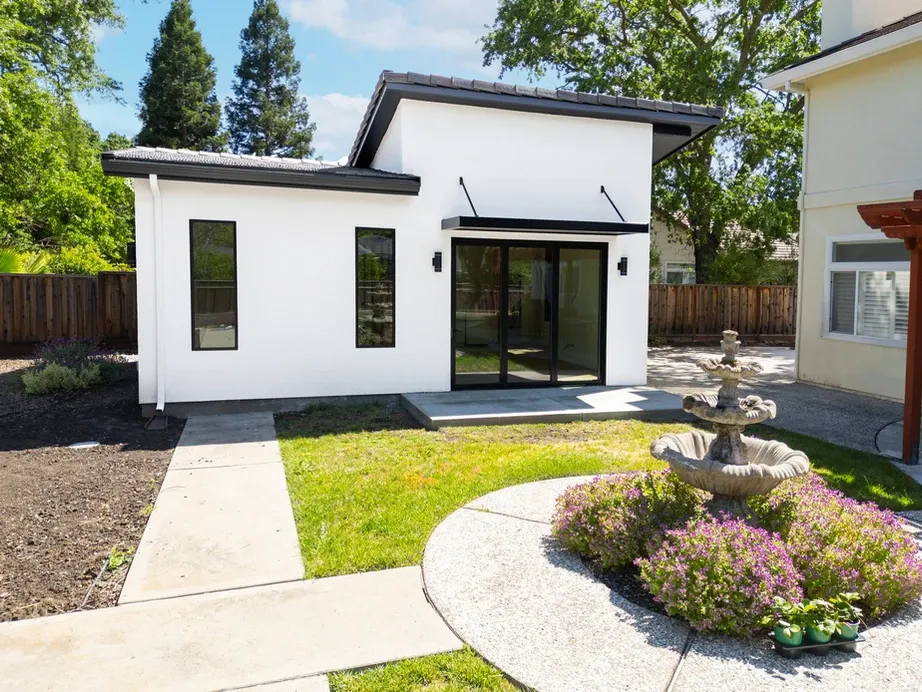
Our ADU. Designed for mixed use — work, entertaining, and family.
For many homeowners, this is the first project of this size they have ever taken on. They may buy half a dozen cars in their lifetime, but plan a major home project once or twice.
That matters, because they are not just evaluating a price. They are trying to make sense of an unfamiliar process without an easy way to gather the pieces:
- What is realistic for my budget?
- Do I need an architect or a designer first?
- What drives cost and complexity?
- How do permits, utilities, and site conditions change the scope?
- Has this contractor done work like mine before?
- What should I expect during the build?
None of this is a knock on the contractor. Most are busy doing the work — managing crews, coordinating trades, keeping projects moving. The challenge is that the homeowner is making a rare, expensive, emotional decision without a good way to learn what they need to learn.
For a decision this size, that information gap creates anxiety.
The decision is not only about price
Price matters. It is often the first thing a homeowner asks about and the easiest thing to compare.
But major home projects are rarely decided on price alone. A homeowner may be weighing a six-figure investment — financing, savings, or future rental income from an ADU. The decision carries financial weight and personal weight.
A kitchen becomes where the family gathers. A whole-home remodel makes the house work for the next stage of life. An ADU lets aging parents stay close, or houses an adult child, or helps pay the mortgage. An outdoor space becomes where neighbors end up on summer evenings.
Homeowners are not only asking, “Who can do this for the lowest price?” They are asking:
- Who do I trust inside my home, for months at a time?
- Who has done work like this before?
- Who will communicate clearly when something goes sideways?
- Who makes me feel confident enough to actually move forward?
When the other factors — quality, process, experience, communication, fit — are not visible, price becomes the default comparison. Not because it is the only thing that matters, but because it is the most visible thing in front of them.
The opportunity is to make the rest of it visible too.
Project photos are not enough
Photos matter. But photos alone rarely build confidence.
A finished kitchen or backyard or ADU may look beautiful, but the homeowner also wants the story. What was the homeowner trying to solve? What constraints shaped the project? What made it complex? What should the next homeowner take away from it?
A gallery shows the outcome. A project story shows how the contractor thinks, solves problems, and walks people through the work — which is what the homeowner is actually trying to evaluate when they are deciding who to spend the next few months with.
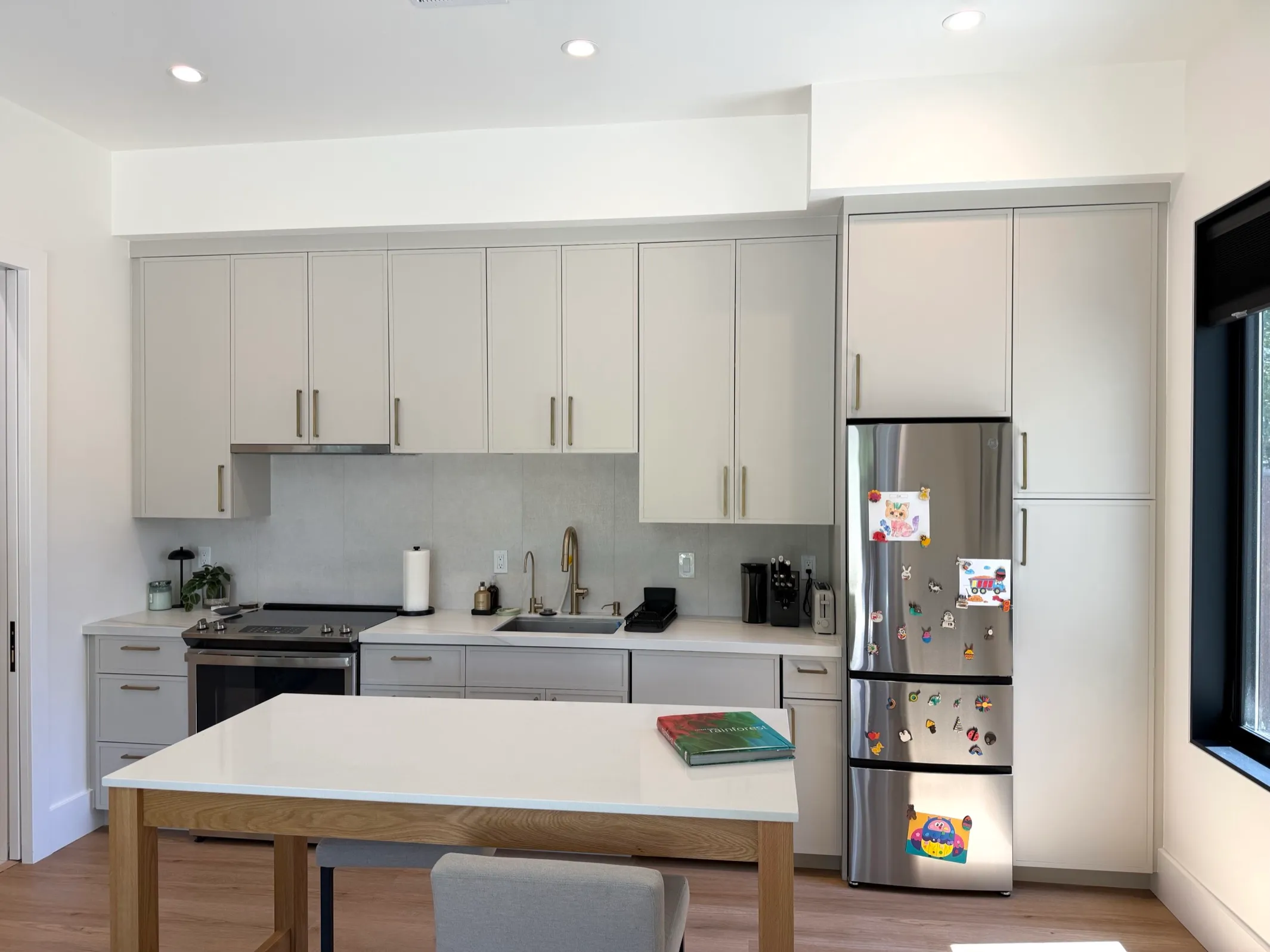
Inside the ADU. The layout had to flex between home office, entertaining space, and a future living space for a parent — the kind of tradeoffs a finished photo alone does not explain.
A better buying experience
Homeowners are already doing the research. The question is whether they are learning it from you, or from scattered, generic sources across the internet.
A stronger website does not replace the sales conversation. It makes the sales conversation better. When the homeowner understands more before they reach out, they ask better questions, both sides figure out fit faster, and the homeowner walks in feeling less like they are guessing.
For a six-figure project tied to someone’s home, family, and future, the buying experience should not feel more confusing than buying a car. And since the homeowner cannot take the project for a test drive, the website and the early conversations have to help them picture what working together will feel like.
The contractors who make that experience clearer will stand out — not just because they build well, but because they help homeowners feel informed, confident, and ready to take the next step.